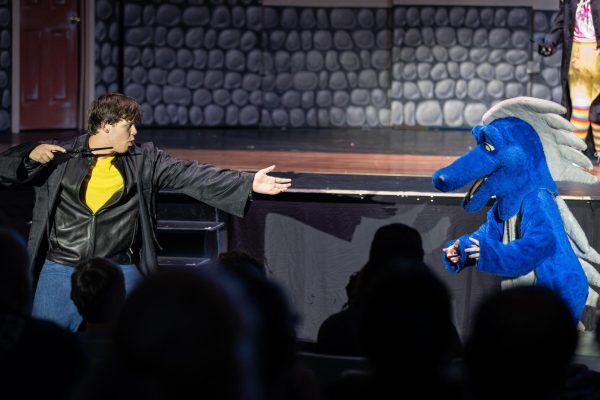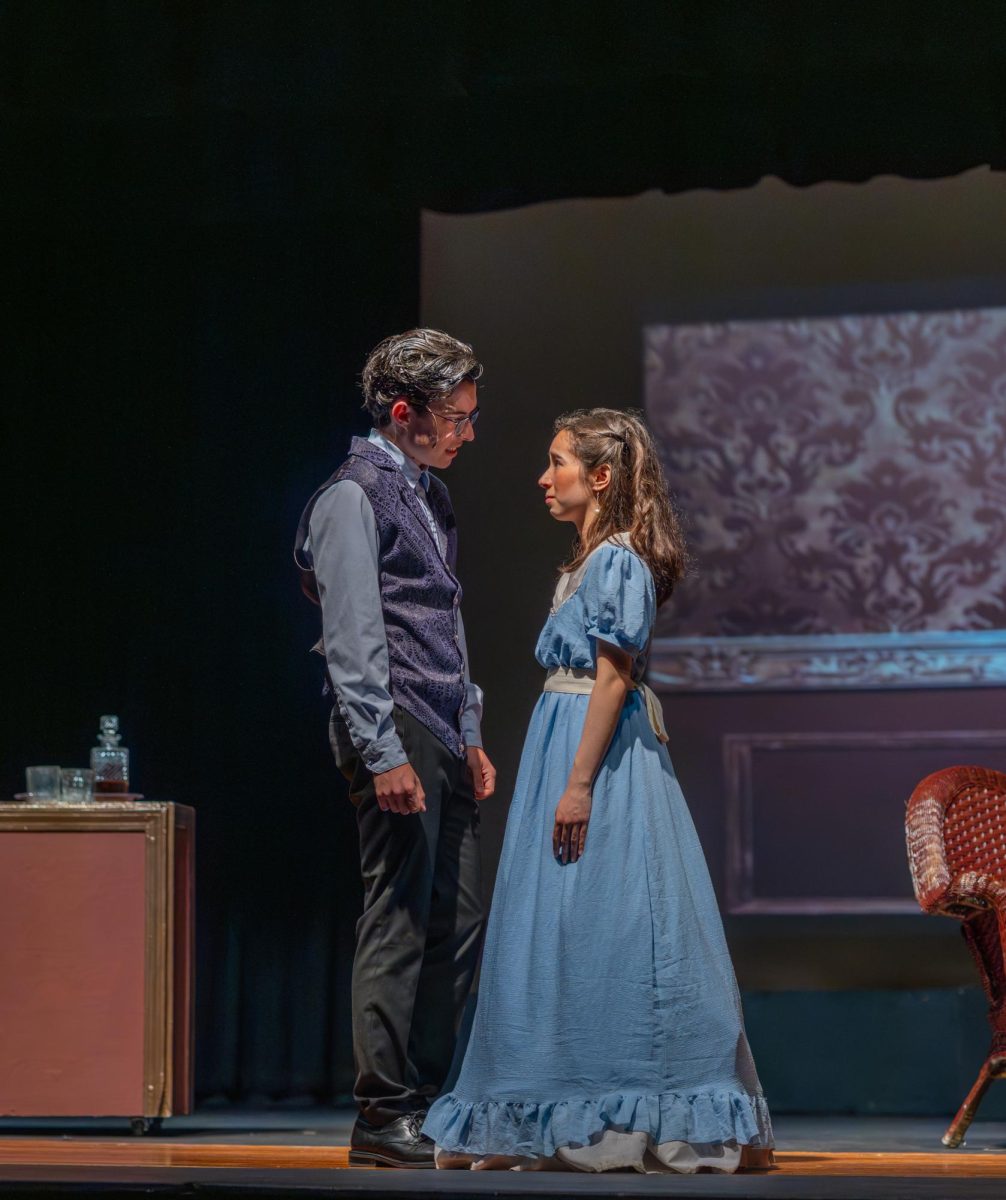

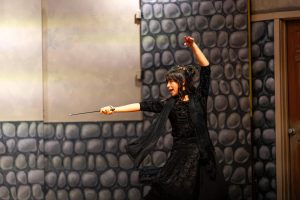
The audience was watching wizards onstage, but magic was also happening backstage. Cast and crew navigated through quick changes, missing props, and improvisations to make the world of Harry Potter come to life. This organized chaos took place from November fourth to the eighth, showcasing the wizarding world of The Puffs.
Junior stage managers Elliot Johnson and Isabella “Bella” Gomes believed the fall play was a success. Bella especially enjoyed “the comedy aspect of it.” She said the show was very uplifting and that she was happy to have brought “comedy back into the theater.” Elliot felt that the “tech theatre classes did a really good job making the sets” because they helped the audience feel immersed in the Harry Potter world through detailed props and costumes.
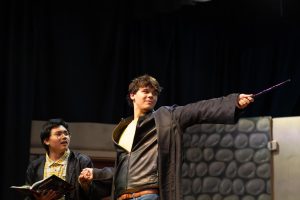
Backstage, however, they said there was room for improvement in organization. Some people “kind of left their costumes and props around where they probably shouldn’t have,” which caused minor disorganization. There were also “small props in the show,” and Bella felt the actors “didn’t take the best care of them.” Still, she said everything else backstage was organized, and those small issues did not hurt the show.
Much of the main Puffs crew and tech team often rely on improvising or making the most of unexpected situations. For example, when one of the doors broke during a curtain close, they fixed it using a drill from stage left, and no one in the audience noticed. During another show, stage right missed a cue, but “actors and the other side of tech were able to help, run over, and change the scene too.” Strong communication among the actors helped keep the play running smoothly.
The size of the tech crew also made scene transitions smoother. Stage left is larger than stage right, so having fewer people on stage right helped prevent its hallway from becoming too cramped—though it still was—while a larger group on stage left ensured there were enough hands to help with transitions. There were always people available to move the walls, discuss changes, and organize each transition.
Stage right is typically cramped because it contains the dressing rooms, a stairwell, and a hallway, while stage left includes the entire scene shop, making it much larger. Stage right becomes especially congested when doors are opening, and people are moving through the hallway. Even so, Bella said the actors are always “super aware and alert” and quick to help anyone who needs it, creating a supportive backstage community within the limited space.
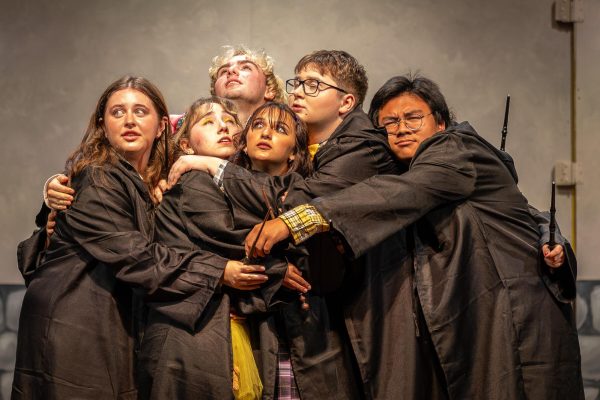
For Puffs and The Addams Family, the stage managers created an online set plot that benefited both tech and actors. The set plot listed every single scene change and assigned who was responsible for each set piece. It also included every scene in order, helping actors know where they were supposed to be, what was happening next, and how many scenes remained.
One thing many people overlook in theater is that the tech crew makes mistakes too, Bella and Elliot said. But they work hard to ask questions, seek help, and stay organized—something they demonstrated this year and last year. Everything was laid out, printed, and available on their phones, providing numerous resources that increased the odds of a successful show.
This year was also Bella’s first time stage managing. Last year, she worked on Addams as a regular tech crew member on stage left. With the larger responsibilities this year, she put herself out there, asked questions, and stayed calm under pressure—though she joked that she likely bugged Elliot with all her questions. One major lesson in theater, she said, is that communication is key, and it’s one of the most valuable takeaways for anyone in tech.