And just like that, another school year is coming to a close. For seniors, it marks the final semester of high school—ever. Many are already committed to colleges and beginning the search for roommates. As senior activities ramp up, schoolwork often starts to fall to the back burner. This is when the supposed phenomenon known as “senioritis” begins to set in.
But is senioritis simply an excuse for seniors to slack off, or is it actually a form of glorified burnout? According to the APA Dictionary of Psychology, burnout is defined as “physical, emotional, or mental exhaustion, accompanied by decreased motivation, lower performance, and negative attitudes toward oneself and others.” Burnout is commonly associated with those who work long hours, endure late nights, and carry heavy workloads—professions such as teachers, healthcare workers, servers, and first responders. However, high school students are often overlooked in this conversation. Many juggle multiple classes, sports teams, part-time jobs, and hours of homework late into the night. Experiencing burnout as a senior is entirely plausible, yet it is frequently dismissed under the label of senioritis.
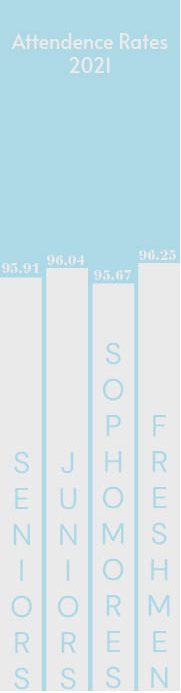
The stigma surrounding senioritis suggests that seniors claim, “I have senioritis, I can’t do this anymore,” as a way to justify slacking off. While some students may fall into this pattern, not all seniors fit the stereotype. There is a common assumption that once the second semester begins, seniors disengage and attendance drops. However, statistics suggest otherwise. Principal Michael Pappas of Rocklin High School noted, “Average daily attendance, the seniors were at 95.91%, juniors at 96.04, sophomores at 95.67, and freshmen at 96.25, so not a big difference.” Data like this begins to dissolve the idea that seniors are collectively checking out.
Post-COVID seniors have also experienced high school differently than those before the pandemic, particularly when it comes to coursework and credit recovery. Before COVID, students who failed classes were required to attend summer school or night school to make up credits. This expectation forced students to take accountability and dedicate additional time to completing graduation requirements. Now post COVID RHS offers ‘credit recovery’ courses. This is an in-school class you can take if you’ve failed a class to get those credits in order to graduate. This puts less stress and accountability to get credits back.
Despite its common use, the stigma surrounding senioritis paints seniors as apathetic and unmotivated, suggesting they have simply given up during their final semester. While motivation may decline, that doesn’t necessarily mean effort does. Micheal Pappas said, “Think of high school as a marathon. One way you finish, you see that finish line, you’re running hard, you’re 100% all the way through. Then there’s the, you know, I got a good pace. I’m gonna keep my pace going right though the finish line. Or, there’s the, I see the finish line, I know I’m there. I’m gonna go ahead and walk this one out”. It varies from senior to senior, but most of them find the strength to finish and go out with a bang versus slow down and give up. The persistence of this stigma overlooks the reality that many seniors are not giving up, they are pushing through fatigue to reach the finish line.
Ultimately, the conversation around senioritis deserves more nuance. Labeling an entire class as disengaged minimizes the academic, emotional, and personal demands seniors continue to navigate during one of the most transitional periods of their lives. As graduation approaches, seniors can finally see the finish line and that in itself can give them a boost of motivation.