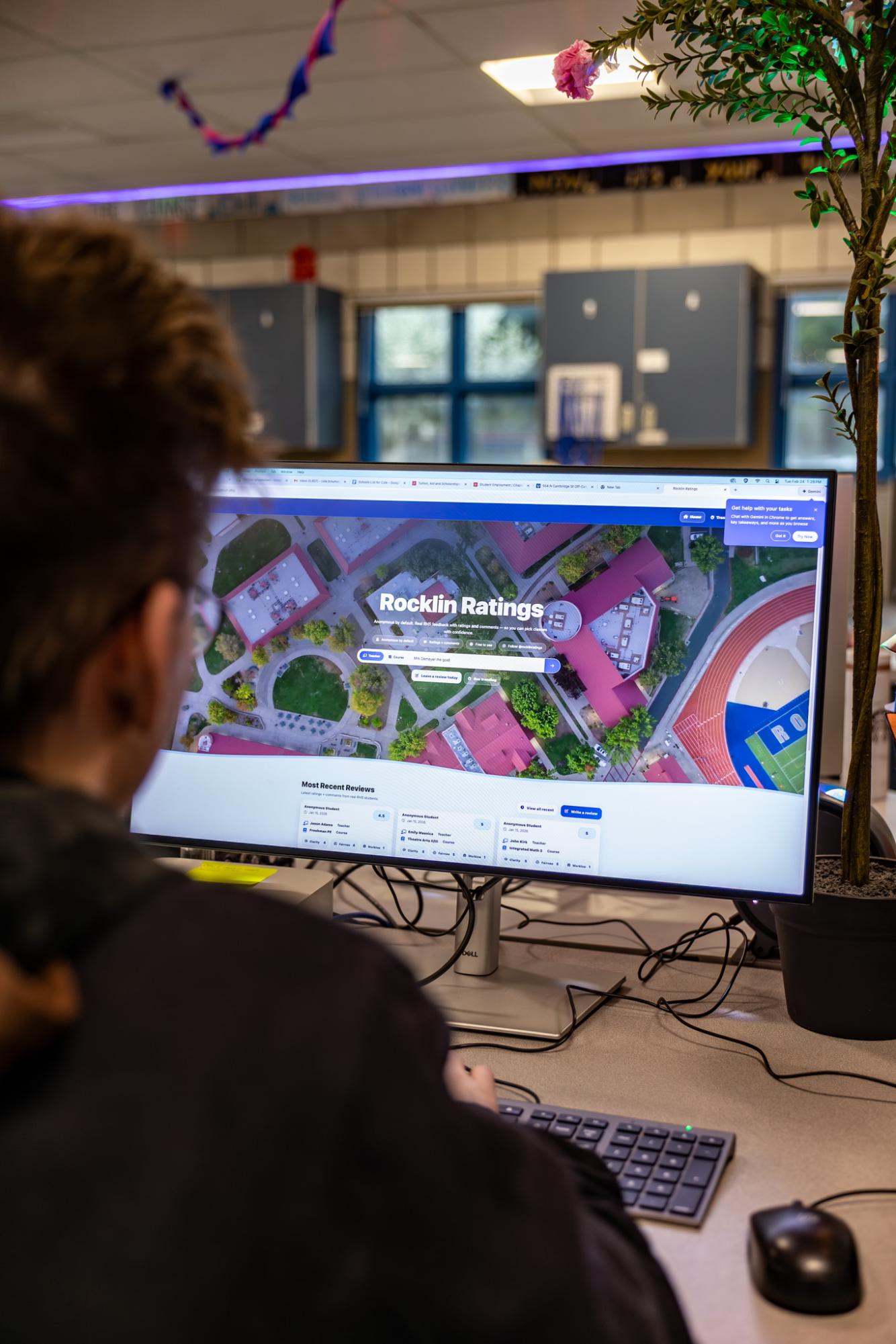
Earlier this semester, a new website began circulating among Rocklin High School (RHS) students: Rocklin Ratings, a “Rate My Professor”–style platform where students could anonymously review RHS teachers. The site was not affiliated with RHS or the Rocklin Unified School District, but it caught popularity nonetheless.
At first glance it appears to be as simple as rating a teacher and or class, but it’s more than that. On campus students have little to no outlet to express their views about RHS and if there is one it is not being brought to our attention. Rocklin Ratings however could have become a place for that, allowing students to exercise their right of freedom of speech sharing their views about the classes and proposing change. With these sharing of views Rocklin Ratings could have also become a very helpful tool in the process of helping students decide their future classes. Allowing students to have a good understanding of what they are signing up for instead of going in blind.
However, the concept felt predictable. We live in a culture built on reviews. Students rate restaurants, apps, movies, and colleges. Bringing that model into a high school setting seemed like a natural extension of Internet culture. Students spend nearly seven hours a day in classrooms.
They experience teaching styles, grading policies, and classroom environments firsthand. Some viewed the platform as a way to share honest feedback without fear of retaliation.
Anonymity, however, changes the tone of a conversation.
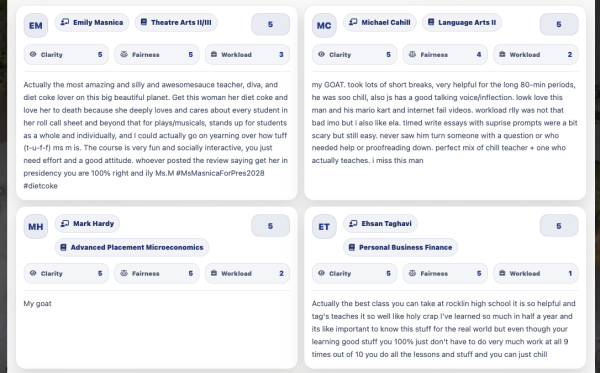
While some posts reportedly included constructive criticism, others crossed into mockery or personal attacks. The absence of names removes accountability, causing students to abuse these freedoms. What might have been phrased as thoughtful feedback in a face-to-face conversation can become exaggerated or careless online. Teachers are professionals, but they are also members of the same community. Public commentary, especially when anonymous, carries weight.
Rocklin Ratings became more than a website. It became a prime example of student speech in the digital age. The First Amendment protects freedom of speech, and students do not lose that protection at school without due process or a legitimate legal basis. However, that protection is not unlimited, especially when speech causes disruption or harm within a school setting.
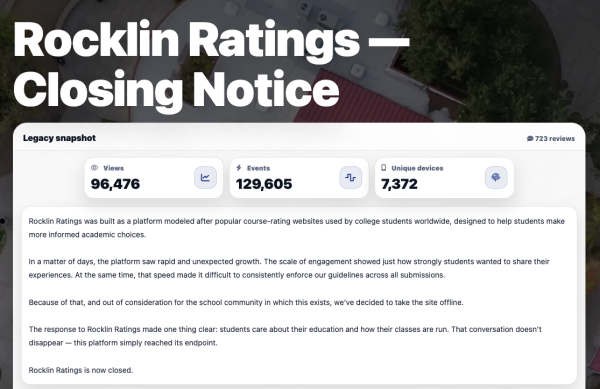
The website did not remain active for long. As awareness grew, so did concern from members of the community. The platform has since been taken down or made inaccessible. The exact launch and closure dates remain unclear, but its short lifespan was enough to spark strong reactions. Some students saw it as empowerment. Others saw it as disrespect. Both reactions reveal something important: students care about the quality of their education and the culture of their campus.
Rocklin Ratings may be gone, but the larger conversation remains. Digital speech moves quickly. Its impact lasts longer. In a school built on daily interactions and long-term relationships, the way criticism is delivered matters just as much as the criticism itself. Freedom of speech is a powerful right. In a close-knit community like RHS, it also carries responsibility.