
With a growing interest in club soccer, student-athletes at Rocklin were challenged with playing for both a club team and the school team. There were many different aspects that varied between the two, including team chemistry, skill level, and campus life.

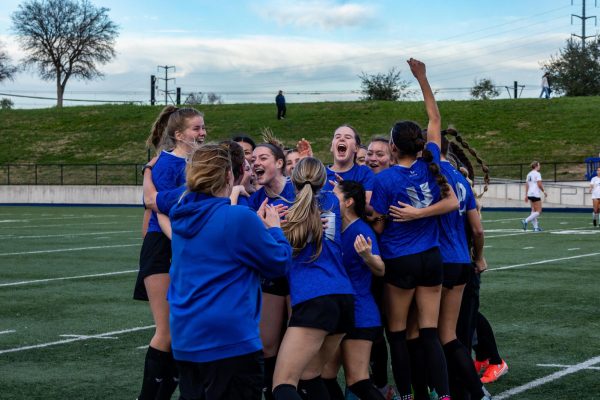
To start, team chemistry majorly affected how a team could play on the field. Ashleigh Fosson explained the RHS soccer team was affected by relationships, saying, “I feel like [the team is not as] good at passing because we don’t have as much communication.” However, Payton Nollette said that playing with her classmates allowed the players to feel a level of trust even though they had never met before. “I think it makes us more comfortable with each other, even though we’ve never met before, because you have to have a level of trust with soccer. And I think it just makes everyone feel more comfortable with each other, and it kind of connects you more with people you don’t already know,” she said. She continued, “I think I gained new relationships with people on campus.” Brady Kaley agreed, stating, “In high school soccer, you get to see people every day and around school. It’s kind of cool.” Presley Gale also said, “I feel like we connect more because you see them in school, so you see them more often than just at practice.” Seeing teammates at school helped deepen trust and bonds, which created cleaner communication and overall better play. However, for some players, their club teammates did not go to the same school. Casey Abad said she “[was] not as close with [her] club team because most of them go to high schools in Roseville.” With that team only seeing each other at practice, it didn’t create the same clean communication compared to her high school team.
“I like to have the best of both worlds.” –Chloe Kadden
Another important characteristic of a team was having the same skill level among players. Gale said, “Club soccer is more high level, more foot skills, and high school is more kind of relaxed and laid back.” Kaley added, “The level is a little bit higher in clubs because you’re playing with new people who may play at a higher level.” Nollette agreed. “Club soccer is taken a lot more seriously than high school soccer, because high school soccer is just students who sign up because they just want to participate in athletics. But I think club soccer takes another level of dedication. I think the club players that are on the school team want to actually play soccer,” she said. For those who only played high school soccer, there was a long break between seasons, while other girls played year-round, which added a division in ability and skill level. Abad argued, “On the high school team, the levels are more combined together. And it’s just mixed levels.” Competitive player Chloe Kadden agreed when she noted, “Sometimes the level can just differ on levels of communication and knowledge of the game.” High school teams had to organize people by both skill level and grade.
In addition, school and club soccer had their own effects on campus life. Kaley said, “[On my school team] I got to know a lot more people, and I’d walk around, make friends, and notice people that I’d seen or played soccer with.” Kadden explained her experience on campus. “I think it’s cool if you want to go talk to teammates, or ask them any questions. I think it’s a good thing if you have questions regarding the game, or if you just want to say hello,” she said. She also described the collision between school and soccer. “It’s definitely interesting, because you have your soccer life, and you have your school life. And two worlds collide, and some people like it, and some people don’t. I don’t like it, but that’s my opinion. Because I like to have the best of both worlds. You know, I like to have an athletic life and a knowledge life,” she said. School soccer allowed students to connect with others on campus about their interests, helping to bridge school life and soccer life. It also helped with gaining friendships and creating closer relationships with teammates. Nollette said, “I think I gained new relationships with people on campus in general, because some of the people that were on my team this past year for school, I didn’t know them around school until I met them through soccer. And then that way, I was able to be friends with them on campus, just wave and smile.”
All in all, school and club soccer had their differences, both positive and negative, mainly in skill level, campus life, and relationships with others. In the end, both school and club soccer offered many opportunities for aspiring soccer players.